Tuesday, December 29, 2015

Strawberry Farming

Strawberry Cultivation
Agriculture Technology

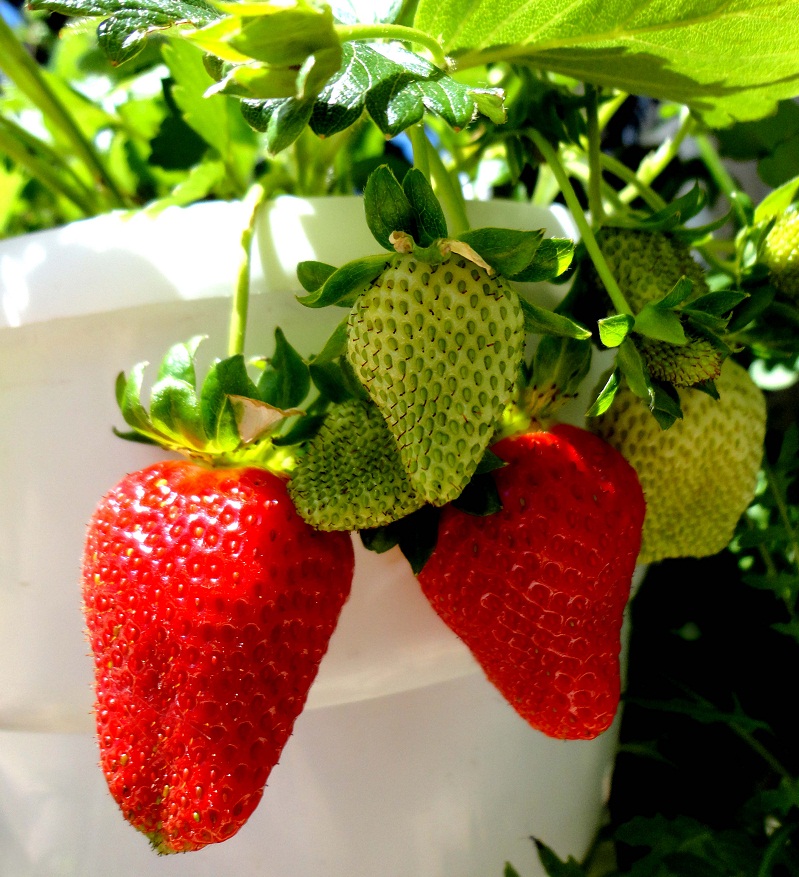
Strawberry fruit is undoubtedly one of the fruits of the most favored by the people. A few years ago, red fruit has even been the fruit of an elite that many people dream to eat. Not surprisingly, first, our country is only able to import this so that the number of strawberry fruits on the market has not been as busy now. However, another first, was also present. If you are a fan of strawberry, to capitalize strawberry cultivation techniques, you can even cultivate the fruit of this one in your own yard today. Here are various ways budidayayang you can do in your own yard. strawberries can be planted in the greenhouse. Strawberry fruit can be processed into cakes


If you want to cultivate strawberries in your own yard, the first step you should do is find a land fit for cultivation of the fruit. To carry out the cultivation of strawberries, you should have a garden with sandy clay soil that is loose and fertile and contains a variety of organic materials. In addition, the water system and the air in the garden should be good and the pH of the soil where strawberries will be cultivated among 5.4-7.0.Selain that you want to plant strawberries cultivated in the garden, you can also do it in the pot, however, if you want to cultivate strawberries in pots, soil pH is in the pot should be between 6.5-7.0 and not 5.4-70.

Strawberry fruit can be grown from seed and vegetative seedlings, so, there are several options that you can use seedlings when they wanted to cultivate the fruit of this one. For seed grain, you can get them at farm shops and menyemaikannya in plastic or wooden box containing a mixture of soil, sand and manure. Flush the nursery every day and then move into beds strawberry seedlings when the seedlings have two leaves. Meanwhile, if you choose seeds vegetative, parent plants you want to use to make the seed must have been aged 1-2 years and a healthy and productive.


One of the best ways in the cultivation of strawberries in the garden is with plastic mulch. To cultivate strawberry with plastic mulch, first of all, you must mengeringanginkan you want to cultivate land with the strawberry plants for 15-30 days. After that, make beds with a width of 80 × 120 cm and with a height of 30-40 cm and then dried again for 15 days and sprinkled with fertilizer. Flush the land that has been sprinkled with water to lambab then cover with black plastic mulch. For strawberry planting, mulch Punch a hole as wide as the milk can then make a hole in the ground right where the hole had been made in the mulch and plant the seeds of strawberry in the hole.


Strawberry hydroponic

Strawberry Hydroponic Farming
Agriculture Technology

Strawberry plant is a plant that favored the planters or public housing. Strawberry plants are very suitable to be developed or cultivated in our climate, and only requires a low cost, and we will be able to harvest about 1-2 years from the beginning we are planting (of seeds). Strawberry plants can bear fruit throughout the year and prolific fruiting up to four years. Hydroponic plants is an activity or activity that is done using water for growing plants without using soil media. This plant is grown using plastic containers or pots that use water and other shaft such as gravel, stone tiles and other threshold for the planting medium.


In order for good growth this naming should require fertilization by means of dissolving organic fertilizer. In addition, by using this planting medium that is very abundant benefits in comparison with the other form gives higher production, terhadapt resistant to pests and diseases and others. On this occasion fredikurniawan will review how to cultivate strawberry plants hydroponically.

Planting

1. Provide a container or pot that will be used for planting media, should not there is a hole on the bottom of the container or pot.

2. Giving a hole in each of milk, approximately 4-5 cm from als and wash thoroughly.

3. Provide media such as sand, gravel or other. Wash thoroughly and soak in boiling water for 30-60

4. Put media that had been prepared earlier into a container up to 3-4 cm in atad hole made earlier. 

5. And also prepare the pipe on the edge of the container

6. Then tanamankan plants that had been prepared earlier, do not get damaged or broken roots.

7. Then do pemberiaan nutrient that is a liquid organic fertilizer or other fertilizers thawed.

8. Then save the plants in a place very far from seranga outside and pests and other diseases.

9. After the age of 2-3 weeks, do re pouring liquid fertilizer.

10.Next do control is continuous and good crops.


Maintenance of the plants with the media is done by way of control, fertilization and pest and disease. Pengentrolan is done aims to determine the state of the media in a state of dry or moist. Fertilization is done by using a liquid organic fertilizer, urea in the melt, fertilizers and fertilizer pic tsp melted in the melt. While pests and diseases can be done by way of replanting the plants dead, shriveled and dry replace them with new ones, and can also use the spraying of herbicides, and insecticides fungsida according to the dose specified,

Harvesting crops with this medium very quickly which is 4-6 months depending on the growth of plants. Harvesting is done by doing the plucking with the help of scissors or a knife support, not to damage the fruit or plant. Then enter into the packaging. Pemanan is done regularly: two weeks to produce quality plants.

Pepper farming

Peppers Cultivation
Agriculture Technology

Peppers (Capsicum annuum var. Grossum) is a type of chili that large fruit and fat, it is not spicy but slightly sweet. Many seeds imported from abroad, such as Japan and Taiwan commodities proved to be extremely suitable to be cultivated in several regions in Indonesia, which means that this is an opportunity that the future is bright. peppers have many health benefits. also has high economic value. Peppers can be grown hydroponically.

Paprika is a subtropical plant that would be more suitable to be planted in areas with elevations above 750 m asl (above sea level). Although when compared with other request types of chili, peppers smaller demand, extensive planting of peppers growing in line with market demand continues to increase. And more advantage of peppers cultivation could provide greater benefits than other vegetable cultivation by a narrow land. Peppers is just nice cold planted area, which is below 30C (between 15 - 25˚C) or lower plateau humidity below 70%. Because of the high temperatures or in low-lying causes an increase in pests and diseases.

Peppers is a plant that is sensitive to nature, therefore this plant should not be exposed to rain, because it can cause stem rot and fruit. Then the cultivation of peppers are the most appropriate and suitable for maximum results is to use Green House (GH) with hydroponics system.
For the most economical GH, GH which is made of plastic UV. To get optimal results, you should use with the degree of acidity (pH) of growing media of 5.8 (5.5-6.5) which can be measured by a pH meter. The medium used is the husk (without soil) watering and fertilizing is given in the form of an aqueous solution that the level of concentration (density) control. Fertilizer used is AB Mix solution with density (EC) 2.3 to 2.6 can be measured by the EC meter. The intensity of light needed paprika plants, namely 60%. It was fulfilled at GH of plastic UV.

PLANTING
Pepper seeds need to be sown before planting. The process of seeding should be done in a sterile on rice husk. Seeds germinated in trays for 1 week. Furthermore, paprika seeds that do not have a perfect leaf is transferred to a small polybag diameter of 10 cm for 2 minngu until the 2-3 leaf. Then the seeds are planted in the real media big polybag size 30 x 35 cm. The plants will start flowering at the age of 2-4 weeks after planting and at the age of 2.5-3 months paprika fruits can be harvested up continuously. Paprika production period of 8-9 months with high 2,5-4m. In maintenance pruning needs to be done on vegetative shoots that appear on the main trunk armpits, so that flowers produce large bell pepper. Pruning is intended that the plants grow without many branches extending upward, while the rate cuts intended that nutritional fruit growing competition fulfilled without any absorption of food it will be large. Suppose one stalk, there are about 2-3 flowers, then maintained pretty one.

HARVEST
Pepper fruit is divided into three colors, namely red, yellow and orange. Peppers green is the color of all kinds of young pepper. Of economically harvesting young peppers (green) make the revenue stream of income to be faster, and also reduce the risk of fruit affected by pests and diseases. Harvesting is done along with the bell pepper fruit stalk (Calix), because in addition to enhance the appearance as well so that the peppers can be durable in the market. The harvesting process must be done carefully lest the fruit dropped or exposed to puncture scissors or knife. So the fruit is harvested could remain flawless. As for the form of packaging that is often done in the transport is with plastic baskets that each layer was given a newspaper, can also use an insulated basket like a basket of eggs.


Monday, December 28, 2015

Lettuce

Lettuce Cultivation

Farming System

Hydroponic lettuce cultivation is simple and can be done in your home. Hydroponics is actually a way or farming techniques using non-soil or planting medium other than soil. In the media hydroponic plants can be roasted husks, sand, cocopeat, gravel rockwool etc. How to grow lettuce for hydroponics can be done anywhere like on the home page, the container can also use pots, paint cans, drums, or bottles of mineral traces. How to grow hydroponic lettuce is actually very suitable to be applied in urban areas or urban areas, because a lot of benefits that include space-saving and environmentally friendly. Here are the stages of plant hydroponic lettuce.

The seeds of lettuce seedlings on a tray or in a container seedlings, which will be used seeds of lettuce that germinated above 80%. For seedling media in general and also good for use is rockwool. Because of Rockwool is very practical because it has water absorption is very high and too sterile course. When the seeds are old enough then you can move into the planting medium. You can use a planting medium that has a shaft that can be used to husk fuel mixture and also sand gravel, or a mixture of sand and gravel rockwool. Then Place in a container planting medium that you want such as a pot or tin cans.

You can use hydroponics proper nutrition, the nutrition in hydroponic planting is very important to the growth of lettuce plants. You can mix their own or buy hydroponic nutrients in each market. Nutrition can be a way to flush manually morning and afternoon, or if you want more practical you can try to plant hydroponic through wick or wick system. The wick technique merupakn one of the hydroponic techniques are quite simple. Treatment in lettuce system using hydroponics is basically not much different from the treatment with conventional systems such planting is done pruning and weeding, as well as other cleanup like other plants.

carrot farming minecraft

Carrot Farming
Agriculture Technology

carrots (Daucus carota L.) is a plant tuber vegetables are usually orange or white. Carrot is a biennial plant (life cycle of 12 -24 months) and classified on seasonal crops. Carrot plants are short-lived plant that ranges from 70-120 days depending on the variety. Morphological features of plants of carrot leaves carrot plants including the leaves are compound, pinnate double two or three and stemmed. Her short stems so almost invisible, round, somewhat loud and 1-1.5 cm in diameter. Carrots have a taproot and fibers. The flowers grow at the end of the crop and double umbrella-shaped white and pink rather pale. Carrot seeds are seeds covered and shaped into pieces of two-color with a length of 3 mm and 1.5 mm. While the tuber is formed of a taproot changed into a backup storage of foods such as carbohydrates, proteins, fats, vitamins, minerals and water.


There are several factors that influence the growth of carrots such as soil, temperature, precipitation, humidity, and solar radiation intensity. Carrots are usually grown on soil with good soil structure texture like andosol, alluvial, regosol and latosol usually found in the highlands but also can be cultivated in the lowlands. While the degree of acidity of the soil is suitably 5.5 - 6.5. temperature also affects primarily on metabolic processes, photosynthesis, transpiration, enzyme activity, absorption, absorption of nutrients and others.

The optimum temperature for growth of carrots is 15.6 - 21.1 ° C, but if at a temperature of 26 ° C with a height of 500 m above sea level will produce tubers that are less satisfactory. While the temperature is too high will produce tubers are short and small. Precipitation also affect the productivity of the plant carrots, if the water shortage will hinder growth meal. Areas suitable for growing carrots is an area that has a wet climate (15-3 dry months in a year) and the climate is rather moist (3 - 4.5 months dry within 1 year) but tanamanwortel also tolerant of climate is very wet (0 - 1.5 dry months in one year).

Air humidity suitable for growing carrots is 80 -90%. In addition, the intensity of solar radiation also affect the process of photosynthesis. The plants will show symptoms such etiolation grow elongated, thin, weak and pale when less sunlight. Such conditions cause the plants will form a tuber.

Carrots can be harvested after 100 days, depending on its type. Harvesting should not be delayed because the tubers will increasingly harden (woody) and is not preferred by consumers. Harvesting is done by pulling the entire plant and its tubers and roots or soil destroyed in order for the harvesting process easier. Harvesting should be done the morning in order to be marketed.


Post-harvest: choose good bulbs and separate the bulbs are broken, deformed, and rotten separately. then store the harvest of carrots on the container or room temperature is cool and well ventilated. menikat tubers carrots into bonds so practical and easy to transport and storage.

Carrots are known to contain a lot of protein, carbohydrates, fat, fiber, beta-carotene (provitamin A), vitamin B, vitamin C, glutathione, containing Ca, Mg, Fe, P, S and Cl. With implies that carrots efficacious in curing some diseases such as high blood pressure, tighten the facial skin, high cholesterol, pancreatic cancer, lung cancer, hepatitis, and prevent stroke.

Tobacco Farming

Tobacco Farming


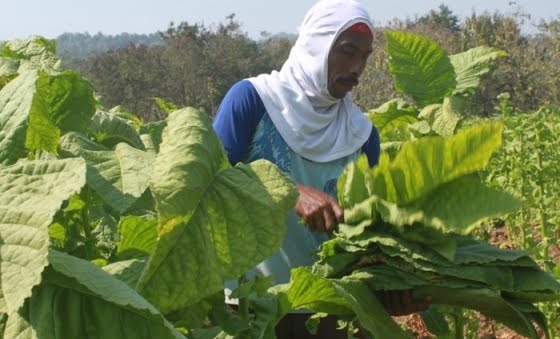
Tobacco is the agricultural product processed from the leaves of plants of the genus Nicotiana. Tobacco can be consumed, used as pesticides, and in the form of nicotine tartrate can be used as medicine. If consumed, in general, be made into a cigarette tobacco, chewing tobacco, etc. Tobacco (Nicotiana spp., L.) is a broadleaf plant species originating from the regions of North America and South America. The leaves of this tree is often used as raw material for cigarettes, either by using a pipe or rolled up in the form of cigarettes or cigars. Tobacco leaves can also be chewed or dikulum, and some are smoked tobacco powder through the nose.


Tobacco leaves are often associated with cigarette can be utilized for human health. According to the study, tobacco can be used as a protein-producing reactor Growth Colony Stimulating Factor (GCSF), a hormone that is essential in stimulating blood production.
About the efficacy of leaf tobacco, a protein made by the body's DNA. If the DNA in the body was transferred to tobacco by bacteria, then the time of entry and the plant that will make the corresponding protein DNA that has been inserted it. Then, if the plant is harvested, it will get protein. Protein is what can be used as an anticancer protein. In addition to the anticancer proteins, GSCF can also stimulate the multiplication of stem cells (stem cells) that could be developed to restore the function of body tissue that is damaged. Further explained that in the field of medicine are pharmaceutical products are now widely used, namely a drug or vaccine in the form of protein.

In addition, tobacco also turned out to contain a natural pesticide. The usefulness may not be something special for us. However, tobacco was also able to produce solar cells. As mentioned in the journal ACS Nano Letters, Matt Franciss, an assistant professor of chemistry, along with his colleagues managed to use tobacco as a media producer of solar cells. Through genetic engineering, researchers at the University of California succeeded in creating a tobacco-producing solar cells. With the help of viruses that have been genetically engineered, tobacco plants can be programmed to produce solar sell.

The mechanism is very simple. The virus was sprayed into the tobacco, let some time, then the virus will infect cells and spread to all parts of the plant. While tobacco cells are infected, they will produce chromophores are part of the molecule that converts light into a high-powered electron (high powered electron). Normally, cells infected with the virus will make a duplicate of the menginveksinya. At that time, the virus will force the tobacco to make chromophores. Each chromophores like a spiral staircase, each spaced two or three nanometers from its neighbor, an ideal distance to harvest the electrons generated. To obtain pure chromophores, tobacco should be harvested, chopped and then extracted. Chromophores dissolved to be sprayed into a plastic or glass coating then locked with certain coatings to be used as a solar panel. This method is claimed to be more environmentally friendly and cheaper. Researchers have long been aware that nature is inspiring the best technology to emulate. Plant utilizing solar energy is the most efficient, for example, to produce sugars through photosynthesis.These developments certainly provide fresh air for tobacco farmers. Perhaps in the future, the tobacco is no longer known as the plant causes lung cancer again.


Benefits of Tobacco

In general, people only know Nicotiana tabacum, also known as tobacco smoking as the main raw material, and of course, many who consider this leaves only have a negative impact, but it helps if you know the miraculous benefits of this leaf.

1. Cancer medicine
Tobacco is not always a negative connotation as a cause of cancer, these plants can also produce anti-cancer proteins are useful for cancer patients. In addition to the anticancer proteins, tobacco could be to stimulate the multiplication of stem cells (StemCell) that could be developed to restore the function of body tissue that is damaged. In addition, tobacco also can prevent cervical cancer. Tobacco contains a source of protein that can stimulate antibodies against the human papilloma virus (HPV), which causes cervical cancer.

2. Removing the leech bites
Benefits of tobacco, but can be extracted and taken certain sections such as nicotine used in a wide range of products of food and beverages, tobacco can also be used to remove the leech bite when I'm in the woods, tobacco can also be used for insecticides because nicotine is a neurotoxin very powerful for insects.

3. Drugs Diabetes & Detection
The scientists succeeded in using genetically modified tobacco to produce a cure diabetes and immune system. The results were published in the journal BMC Biotechnology.

4. Anti-Inflammation
Scientists from several European research institutions participate in the project entitled "Pharma-Planta" led by Professor Mario Pezzotti of the University of Verona. They create transgenic tobacco producing interleukin-10 (IL-10), which is an anti-inflammatory cytokine that is potent. Cytokines are proteins that stimulate immune cells to be active. The genetic code (DNA) encoding IL-10 were planted in tobacco, and tobacco will produce the protein. They tried two different versions of IL-10 are different. One of the virus, the other from mice. The researchers found that tobacco can produce two forms of IL-10 was appropriately. Active cytokine production is quite high, which may be used by a process of extraction and purification.

The next step, IL-10 tobacco was given to mice to investigate how effective it generates immunity. Studies using IL-10 tobacco in small doses could help prevent diabetes or diabetes mellitus type 1 Diabetes mellitus type 1 or juvenile diabetes is characterized by loss of the insulin-producing beta cells in the pancreas. So that there is a shortage of insulin in the body. This type of diabetes can be suffered by children and adults.

5. Medicine for HIV / AIDS
Tobacco can also generate drug protein of human immunodeficiency virus (HIV) that causes AIDS, called griffithsin. HIV is a virus that infects cells of the human immune system. The difference is, instead of the tobacco that produces the protein, but the tobacco virus.

6. Animal Health Maintainer
Extract of tobacco (nicotine 1.68%) has ptensi to eradicate H. contortus worms. As a result of treatment outcomes will provide benefits for the care of livestock, for the better health of the livestock.

7. Removal Dew
Tobacco can also be used to eliminate the "dew" on the glass in the car on a rainy day by rubbing tobacco on the glass.

8. Business Tobacco
The increasing needs of the world's tobacco while productivity is so limited, it does not rule out the possibility that the tobacco commodities business profits also will provide maximum benefit.

9. As Biofuel
More recently, researchers from the Laboratory of Biotechnology at Thomas Jefferson University have identified several techniques to increase levels of vegetable oil in tobacco plant leaves, it is a first step in utilizing these plants for biofuel purposes. Their results are then published in Plant Biotechnology Journal.

According to Vyacheslav Andrianov, Ph.D., assistant professor of Cancer Biology at the Lab. Jefferson Medical College of Thomas Jefferson University, tobacco can generate biofuel more efficiently than other agricultural products. However, most of the oil is only contained in the seed / seed tobacco (about 40 percent oil per dry weight). Although the vegetable oil content of tobacco seeds have been tested and can be used as fuel for diesel engines, tobacco plants but seed production is still very low, at around 600 kg of seeds per hectare. Dr. Andrianov and his colleagues then sought to manipulate the genes of tobacco seed vegetable oil is that the formation of vegetable oil in tobacco plant canopy optimal oil content of seed tobacco. It is also possible as an alternative energy to reduce global warming.


Read More
Potatoes Agriculture

Potatoes Agriculture

Technology Cultivation

            Potato (Solanum tuberosum L) is a horticultural crops that have calories and minerals essential for human needs. Potatoes are one of the world's major food after rice, wheat and maize (Wattimena, 2000). In addition, the potato is one that has a value of horticultural commodities domestic trade and export potential is quite good. In Indonesia often happens constraints increase potato production, such as: (1) the low quality and quantity of seed potatoes, which is a major concern in efforts to increase potato production in Indonesia, (2) cultivation techniques are still conventional, (3) the factors of topography, where areas with altitude and temperature suitable for planting potatoes in Indonesia is very limited, (4) the tropics Indonesia is the optimum place for the proliferation of pests and diseases of potato plants (Kuntjoro, 2000). Planting seed potato quality, timely and appropriate physiological age is the main factor determining the success of the production of potatoes. Efforts to provide quality seed potatoes need to be based on the well-established seed systems (Wattimena, 2000).


              Potatoes including crops that can be grown in tropical and subtropical regions (Ewing and Keller, 1982), can be grown at altitudes of 500 to 3000 m above sea level, and the best at an altitude of 1300 m above sea level. Potato plant can grow well in fertile soil, has good drainage, clay loose, dust or sand dust. Potato plants tolerant of pH at a fairly wide interval of 4.5 to 8.0, but for good growth and the availability of nutrients, pH is good is 5.0 to 6.5. According Asandhi and Gunadi (1989), potato crops grown at a pH of less than 5.0 will produce poor quality tubers. In areas which will be planted potatoes cause problems scurvy, soil pH was lowered to 5.0 to 5.2.Potato plant growth is strongly influenced by weather conditions. Potato plants grow well in an environment with low temperature, ie 15 to 20 ° C, enough sunlight, and humidity 80 to 90% (Sunarjono, 1975).

              Soil temperatures associated with the absorption of nutrients by the roots, photosynthesis, and respiration. According to Burton (1981), to get the maximum out of potato crop requires optimum temperature is relatively low, especially for root growth, namely 15.6 to 17.8 ° C with an average temperature of 15.5 ° C. With the addition of a temperature of 10 ° C, respiration will be doubled. If the temperature increases, the rate of plant growth increases until it reaches a maximum. Photosynthetic rate also increases until it reaches a maximum and then decreases. At the same time the rate of respiration gradually increases with increasing temperature. Lost through respiration is greater than the extra activity generated by photosynthesis. Consequently, there is no increase in net yield and dry weight of plants and tubers decreased.

              The water content in the potato tuber is an indication of the level of freshness so greatly affect the quality, especially the physical quality. Based on observations made after the deposit is known that potato tuber storage in a room with a temperature of 10 ° C for eight days could keep the water content so that visually potato tubers remain as fresh as the new harvest. If the water content of freshly harvested potato tubers compared with the levels of water stored potato tubers after 8 days in temperatures of 10 ° C tends to be an increase (Table 4). This happens because the metabolic processes that occur during storage may lead to changes in non-water components, especially carbohydrates, while the rate of respiration and transpiration can be reduced so that the percentage of water content in potato tubers increases.


            Storage of potato tubers were conducted for 4 days in a temperature of 10 ° C and then transferred to room temperature (18 - 21 ° C) for 4 days and 8 days of storage at room temperature (18 - 21 ° C) was found to result in a decrease in water levels between 0.81% - 1 , 98% (Table 4). Moisture reduction occurred due to the influence of temperature, ie the higher the temperature will further accelerate the rate of respiration in which one of the results of respiration is H2O.
Changes in the chemical composition of processed potato tubers are not expected during the storage one of which is the increased levels of reducing sugars. It is known that in general can increase the storage reduction sugar. Storage temperature 10 ° C for 8 days resulted in increased levels of reducing sugars highest, ranging from 0.096 to 0.109%. This happens because during storage of metabolic processes continue running, while the respiration rate can be reduced so that the accumulation of reducing sugar.


Read More
Sustainable AgricultureAlley Croping
Tomato Cultivation Technology